Wikipedia stuff that seems accurate

Just a quick howdy do!

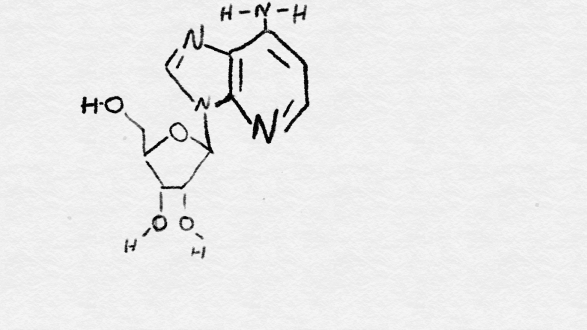
adenos
Hello, this is Adenosine, you may be drinking something very similar in structure to it right now! :)… (caffeine)  

A couple of useful wikipedia pages that seem accurate include this one on m6A found in the mRNA of all eukaryotes I should know as I wrote the bulk of it (with some editing done by other people since, although I do check up on it from time to time to make sure it’s still accurate and no-one is trying to steal all the glory of its discovery for themselves)!

I also made some corrections to this page on the 5′ cap of mRNA, mainly to make it a little clearer and easier to get a working model of the changes in cap structure in your head.

I had no involvement in this Wikipedia page, but it ain’t bad for a general background reading on mRNA, so I’d also recommend it for some light reading!

A tip for the Teledyne ISCO UA-6 Absorbance Detector and making the damned thing digital/hooking it up to a modern computer

It’s been a while, although I’ve been taking notes on stuff I wanted to write, I got wrapped up in some work in the labs, including some stuff on polysome profiling.

Polysome profiling is a great tool for taking a peek at the process of translation – the messenger RNA being read by ribosomes and “translated” into the protein. It’s a fairly simple process too, take some (well preserved – liquid nitrogen) tissue and grind it up in a buffer containing cycloheximide to extract the mRNA and keep the ribosomes frozen in place along the message. You can then analyse this huge pool of mRNA-protein/rRNA in a number of ways, there are some great sequencing techniques that have been used to figure out things like ribosome pause sites – thought to be necessary for the proper folding of proteins. However, the method I’ve been using for the last few years (and tinkering with the last few weeks) is one based on separating out the messages based on how many ribosomes are bound to them, principally the more ribosomes that are bound, the more heavily translating a message is (although I can’t help but wonder if some very fast translating messages could have fewer ribosomes bound to them at any one moment) so you can get a UV trace as a result, and use that data to compare mutants, treatments etc. and see how they affect translation.

Polysome profiling in this way offers an insight into the status of translation of an organism (or cell line, etc.) at the time of freezing by analysing the abundance of proteins according to their resting position after ultracentrifugation in a sucrose gradient. A polysome profile can also act as a preparatory step, so I could then take certain collected fractions and compare them in different ways (i.e. how do highly translating messages look compared to messages found with just one or two ribosomes bound?). Throw the trace and some sequencing together and you have a powerful (although involved) tool for analysing gene expression.

Anyway! The point of this little note is to help anyone along that is struggling connecting the UA-6 Absorbance detector by teledyne ISCO to a computer. Doing so lets you take in all the data that is output from the UV absorbance as well as get finer detail in the peaks… and having a digital copy right off the bat means I could have avoiding hours scanning and formatting traces for comparison and done more science!  We tried for a while through the “correct” routes – involving ridiculous, expensive cables and terribly written software that only supported windows XP, after some tinkering I managed to get it all communicating except the fraction collector would then try to take instructions from the terrible software rather than its perfectly fine pre-programmed instructions – ruining a trial run and sending me back to the drawing board.

You only need a voltage recorder and some banana plugs

It’s really that easy. Anything that can record a voltage between 0 and 1v and can take that reading about every second or so will be enough to get a digital trace. Something like this works just fine!

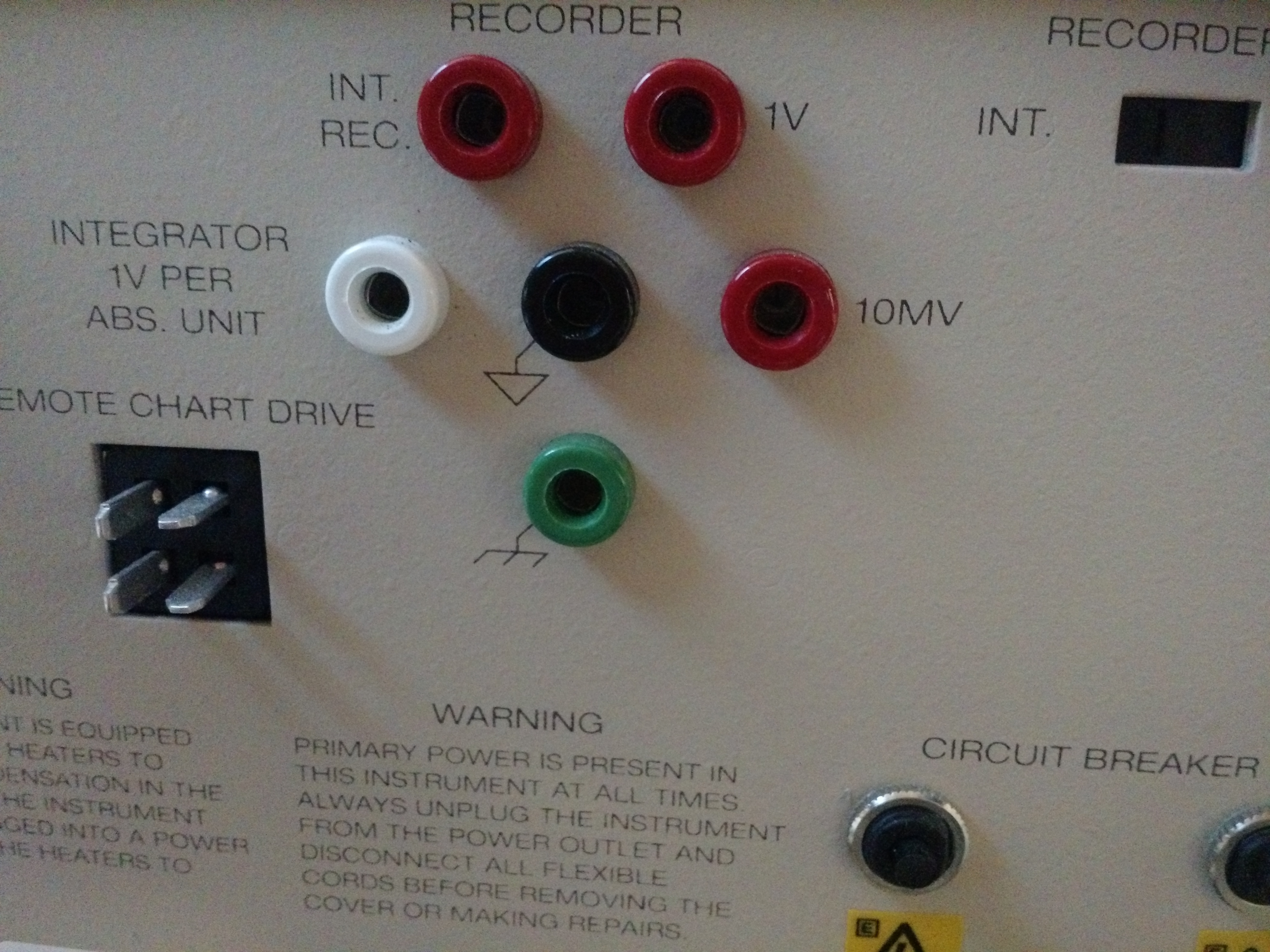
There’s a silly cable that plugs into this mess of banana plug sockets on the back of the fraction collector:

IMG_20150517_184358025

This cable carries an analogue voltage through to the fraction collector which is then supposed to send the data on to a computer to generate a nice digitised trace, in my experience that didn’t happen.

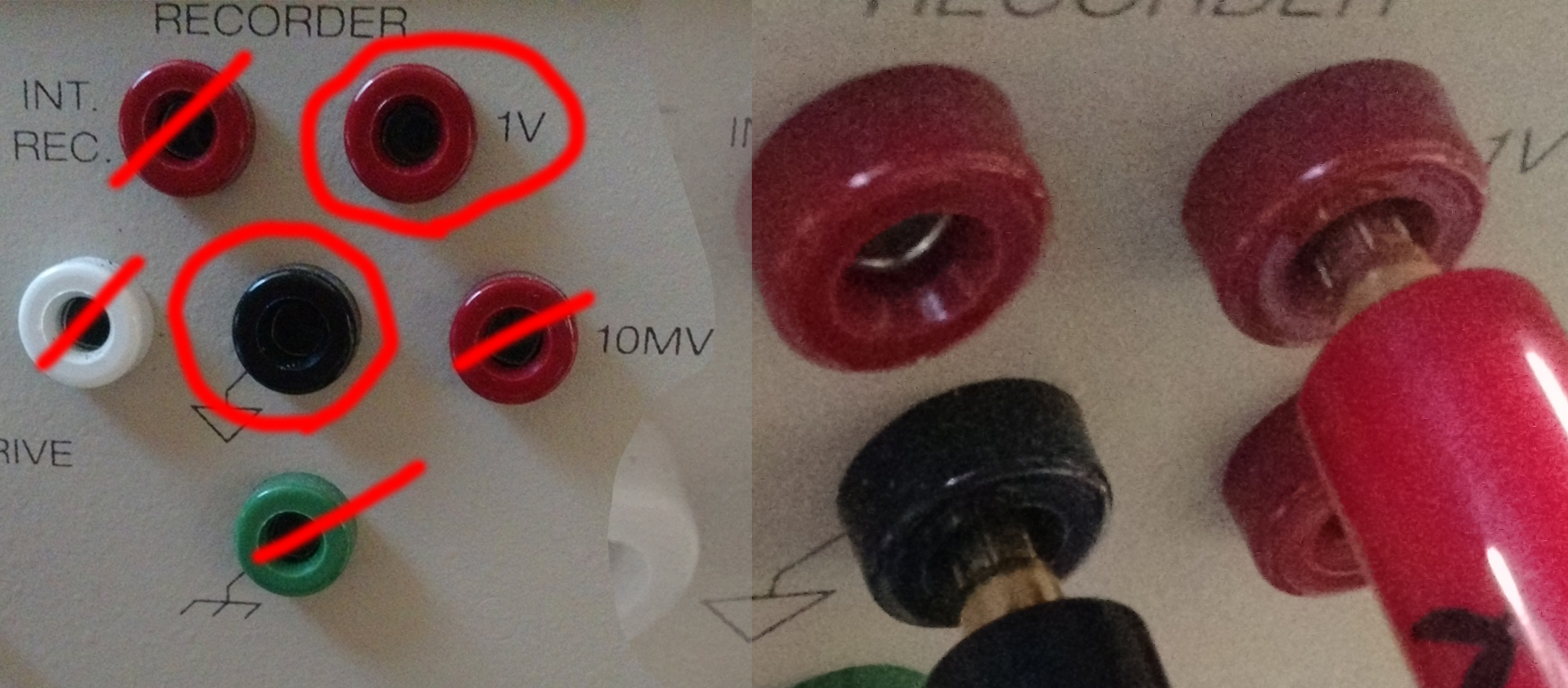
So instead, Take voltage readings straight from those banana sockets, at the 1V point and the ground (black) point:

pic_edited-1

Although you won’t be recording absorbency values, the voltage reading will give the same trace as if the fraction collector were interpreting the voltages (I’ll try to get a decent pair of pictures up for comparison soon!). It’s a system that I’m hoping to improve upon, and using the raw voltage values in excel you may be able to calculate some neat things about the differences in translation, but that’ll be for another time I think!

Just an additional note: I did consider doing this with a raspberry pi I had lying around, but the GPIO on those things, whilst incredibly useful, is digital (i.e. 1 vs 0, rather than analogue which is a continuous range between two values), making this a much more involved process. I think you’d need to rig up a simple circuit that charges a capacitor with the voltage supplied by the detector, and then have that discharge into one of the GPIO pins on the Pi – a discharge could be “1” and not discharging would be “0” to the Pi. Then any programming would involve measuring the time between discharges or “1’s” from the capacitor. Higher voltage = higher UV absorbence = quicker discharge rate of the capacitor. You’d end up with an inverse of the true graph, but it wouldn’t take much tinkering in excel to fix that.

The advantage of a raspberry pi though is that you can then have it email you the data automatically, text you to say everything is done, reverse the pump or get your kettle boiling at home!

Why Capped and Tailed?

I figured I should finally get around to explaining the name of this website. I study, and am fascinated by, mRNA metabolism. mRNA is the messenger molecule, carrying instructions from the DNA locked away in the nucleus, to the molecular building sites – the ribosomes – where it can be translated into a functional protein. During the production of the mRNA message – a long molecule crafted from bases very similar to DNA – the message is given a cap at one end and a tail at the other, with the information stored between the two – given the finished mRNA molecule distinctive features. Given that “Capped and tailed” rolls off the tongue pretty well, and suggests a finished message I thought I’d call this website that. It is currently a misnomer of course, since I don’t seem to be able to find the time to write or update this anywhere near often enough.

FTO, the Fat Controller and mRNA methylation

It’s rare that a week passes without some mention of the latest discovery related to genes and DNA; credited as being the blueprint of life, there’s an oft-forgotten component to that analogy though, it takes a lot to go from blueprint to building, and the same is true on a cellular scale.

DNA is hidden away from the rest of a cell, isolated within the nucleus from the molecular building sites known as the endoplasmic reticulum. It’s the related molecule, RNA that carries the genetic instructions to those building sites.

We share somewhere between 93 and 98% of our genetic blueprint with chimpanzees, and 50% of our instructions are the same as those found within the banana – to a great extent it’s how, where and when those instructions are acted upon that accounts for our physical differences.

One such route for the “expression” of our blueprint to be modified could be by intercepting and adding tags to the instructions on their way to the building sites, and it seems that our cells may be doing exactly that – adding a tag composed of carbon and hydrogen known as a methyl-group, like the asterisk that plagues legal documents, but with the small print currently a mystery.

Of course, given the ability of these tags to influence where or when the instructions are read, it starts to make sense how they could impact diseases such as Alzheimer’s or obesity – even if the instructions themselves are still correct. Try putting doors on a building you’re yet to set the foundations for, or wallpaper across your doorways and you’re going to have a problem. That might be a tidy analogy – but the truth is that no one quite knows what these tags do. This potentially massive new layer of genetic control is almost entirely new science – and that’s exhilarating.

Excitingly more evidence is emerging from the laboratorial trenches showing this level of control over our blueprints is heavily exploited by our bodies. These tags have been known of for nearly four decades, they can be seen when RNA extracted from an organism is combined with a radioactive isotope. Using a chromatography method the individual molecular letters of RNA, A G C and U can be seen, along with any tags attached to them working in much the same way as some inks separate out into their constituent pigments when you let water soak through them on paper. Research into these tags has accelerated in recent years due to a greater understanding and newly developed methods, allowing for a more accurate copy of nature in the synthetic production of RNA to be tested against various proteins, or for their interaction within living cells.

Slowly, but surely, we are translating the molecular small print plastered throughout our genetic instructions.

This has led to the discovery of several important proteins responsible for the addition or removal of the molecular tags. Such discoveries include a gene heavily associated with obesity, FTO, which has recently been found to act as a so called de-methylase – removing the tags from the instructions en-route to the cellular building sites. This is big news, it adds support to the idea that a change in one gene can affect how and when other genes are used by the cell. Beyond genes turning off or on like some of the traditional models and text books like to believe, it seems that genes can be “on”, and yet exist in a cellular purgatory until the proteins they code for are needed by the cell.

Of course that is a single protein, there are others that appear to have a similar function to FTO and there are numerous proteins that interact with the instructions as they travel through the cell before they are read and built, translated, into the proteins which make up our molecular structure and machinery. These RNA-interacting proteins can redirect messages, hold them aside, or ensure that their contents are destroyed or reused. Messages can be chopped and changed after they’ve been copied from the blueprints – it is easy to imagine molecular tags on the RNA influencing some of these processes.

This is the frustrating and exhilarating nature of so called blue sky science, it appears we can chip away at nature’s intricacies to uncover enticing hints of important stories not just for the sake of science but even infringing on some big medical targets – obesity, Alzheimer’s and cancer. However, with any commercial, medical or industrial application still a spec on the horizon it can be difficult persuading the research councils to fund such topics to the extent that would allow them to flourish. If we continue to deny our researchers the freedom to follow new and exciting science down the rabbit hole, that intellectual crime may just rob us of the next big discovery.
Hello World! (Sorry)

Sorry for the cliché, but welcome to my blog and happy new year. I suppose this is one manifestation of my new year’s promises to myself, although in reality I just have a bit of time on my hands at the moment thanks to the completion of my PhD – and this acts as a worthy outlet for my procrastinatory desires to avoid doing the corrections to my thesis.

I’m a biochemist, and I love all sciencey stuff. I studied mRNA methylation and made use of all kinds of whacky and novel methods in an attempt to unravel some of the mysteries of mRNA biochemistry – I probably won’t go into much detail just yet since I’ve been scooped enough without giving away my secrets in advance!

I want to spread some science around, see if I can introduce some complex ideas into the “public” eye – see how far I can get with discussing complex ideas and putting them into context and put some application to them. Although, I must warn you – I’m a major supporter of blue sky science – no specific endpoint or application in sight because that’s where I see all the biggest discoveries coming from.

My other interests (I may write about these, I may not, after all this is my blog) are varied, from fitness and martial arts, to animal rights, to electronics (although my experiments in electronics seldom go well) to photography, and I’m in to computer hardware stuff, gaming fits in there too somehow.

I’m also really bloody opinionated – so I’m sure this blog will be as enraging as it is enlightening (or more so).